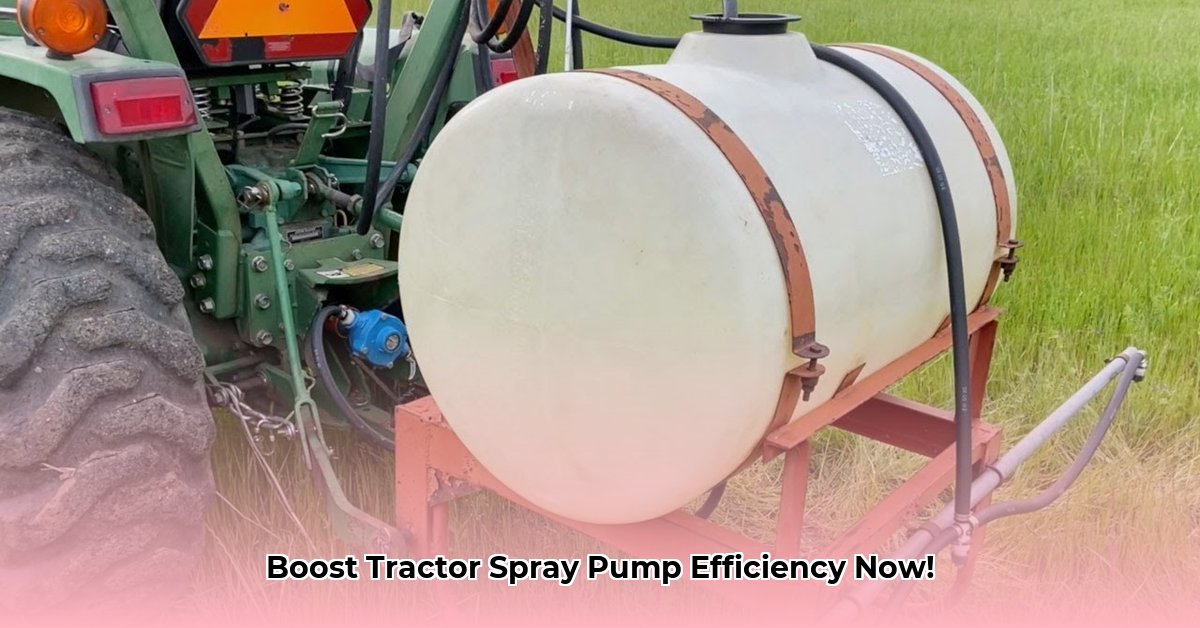
Sustainable agriculture demands efficient resource management, and your tractor spray pump plays a crucial role. This guide provides actionable steps to optimize your spraying process, minimize environmental impact, and maximize your yield. Efficient spraying isn't just about saving money; it's about protecting our planet for future generations. For more information on choosing the right tractor sprayer, check out this helpful resource: tractor sprayers.
Understanding Your Spraying System: Beyond the Pump
Choosing the right tractor spray pump requires understanding the entire system. It's not just about the pump itself; it's about the interplay of pump type, pressure, flow rate, and nozzle selection. Getting this right maximizes efficiency and minimizes chemical waste.
Pump Types: The Power Behind the Spray
Several pump types exist, each suited to different needs. The best choice depends on factors like field size, crop type, and budget. How much are you willing to invest upfront versus how much will be saved through long-term efficiency?
Diaphragm Pumps: Known for durability and ease of maintenance, these are workhorse pumps suitable for a variety of farm sizes and applications. They provide a reliable, consistent spray pattern. Think of them as the versatile and reliable option for most farms.
Centrifugal Pumps: Ideal for large fields requiring high flow rates, centrifugal pumps excel at covering large areas quickly. However, they require higher pressure and are less suitable for smaller, more detailed operations. These are the high-volume pumps for large-scale operations.
Piston Pumps: Delivering high pressure for targeted applications, piston pumps are perfect for precision spraying tasks. They are less efficient for large areas due to their lower flow rates. These are best for precision spraying requiring high pressure.
Pressure, Flow Rate, and Materials: Key Considerations
Beyond pump type, pressure and flow rate are critical factors. High pressure isn't always better; excessive pressure leads to increased drift and wasted chemicals. Finding the optimal balance is crucial for efficiency and sustainability.
Pressure: Too much pressure results in increased drift, while too little pressure leads to inadequate coverage. The ideal pressure depends on the pump type, nozzles, and application. Consistent pressure is also key for even coverage across the field. Isn't consistent coverage essential for maximizing yield and minimizing wasted chemicals?
Flow Rate: Similar to pressure, the optimal flow rate depends on your nozzle size and field dimensions. A flow rate that is too high wastes product, while a flow rate that is too low results in insufficient coverage. Finding the ‘Goldilocks’ zone—the ‘just right’ flow rate—is key to efficiency. What flow rate is optimal for your specific setup?
Materials: The pump's material directly impacts its durability and lifespan. Stainless steel offers superior corrosion resistance, resulting in a longer operational life and reducing the need for frequent replacements. While cast iron is more affordable, it is much more susceptible to rust, requiring more maintenance. How does the long-term cost of a stainless steel pump compare to the cost of frequent replacements of a cast iron pump over time?
Optimizing Your Spray Application: Maximizing Efficiency
Even with the right pump, optimizing your application method is crucial. This involves careful calibration, nozzle selection, and consistent maintenance.
1. Calibration: The Foundation of Accurate Spraying: Regular calibration ensures accurate chemical delivery per unit area, minimizing waste and maximizing efficiency. This prevents both over-application (costly and environmentally damaging) and under-application (ineffective pest control). Think of calibration as a fundamental check to ensure the quality of your operation.
2. Nozzle Selection: Matching the Tool to the Task: Different nozzles cater to different needs. Flat fan nozzles provide even coverage, while air induction nozzles reduce drift. Nozzle selection is crucial for effective and precise applications, impacting both efficiency and environmental impact.
3. Maintaining Consistent Pressure and Boom Height: Consistent pressure ensures even chemical distribution. Monitoring and adjusting the pressure gauge throughout spraying is crucial. Maintaining a consistent boom height above crops avoids under- or over-application, crucial for uniform protection and efficient chemical use.
4. Regular Maintenance: Preventative Care for Long-Term Efficiency: Regular maintenance, including cleaning and minor repairs, extends the life of your spray pump and prevents costly breakdowns, emphasizing the importance of proactive maintenance. According to Dr. Emily Carter, Professor of Agricultural Engineering at Cornell University, "Preventative maintenance can increase a spray pump's lifespan by 20-30%."
Minimizing Environmental Impact: Sustainable Spraying Practices
Sustainable agriculture prioritizes minimizing environmental impact. This section focuses on techniques to reduce drift and conserve resources.
1. Variable Rate Technology (VRT): Targeted Application, Reduced Waste: VRT applies chemicals precisely based on localized field needs, minimizing chemical use and protecting sensitive areas. This technology drastically reduces chemical waste and runoff, aligning with sustainable farming objectives.
2. Low-Volume Spraying: Conserving Water and Reducing Drift: Low-volume spraying uses less water, reducing drift and fuel consumption, but it demands precise calibration and nozzle selection to maintain effectiveness. This highlights the balance between efficiency and environmental responsibility.
3. Reduced Drift Strategies: Protecting the Environment: Drift is a significant concern. Employing low-drift nozzles, maintaining appropriate pressure, and avoiding spraying during high winds significantly reduces environmental impact. According to the USDA, implementing low-drift technologies can reduce pesticide drift by up to 70%.
Choosing the Right Spray Pump: A Personalized Approach
The best spray pump depends on your specific needs. Consider the following:
- Farm size: Larger farms typically need higher flow rates and more robust pumps.
- Crop types: Different crops have different spraying requirements.
- Budget: Balance initial investment costs with long-term savings from efficient operation and extended pump lifespan.
- Environmental goals: Prioritize pumps and technologies minimizing drift and chemical usage.
Long-Term Sustainability: An Investment in the Future
Invest in durable, high-quality equipment. Proper maintenance and careful operation extend pump lifespan, reducing replacement costs and minimizing environmental impact. Choosing a pump with a long lifespan is a long-term investment in your farm’s sustainability and economic success. A well-maintained pump is a significant step towards environmentally responsible farming and profitability.